
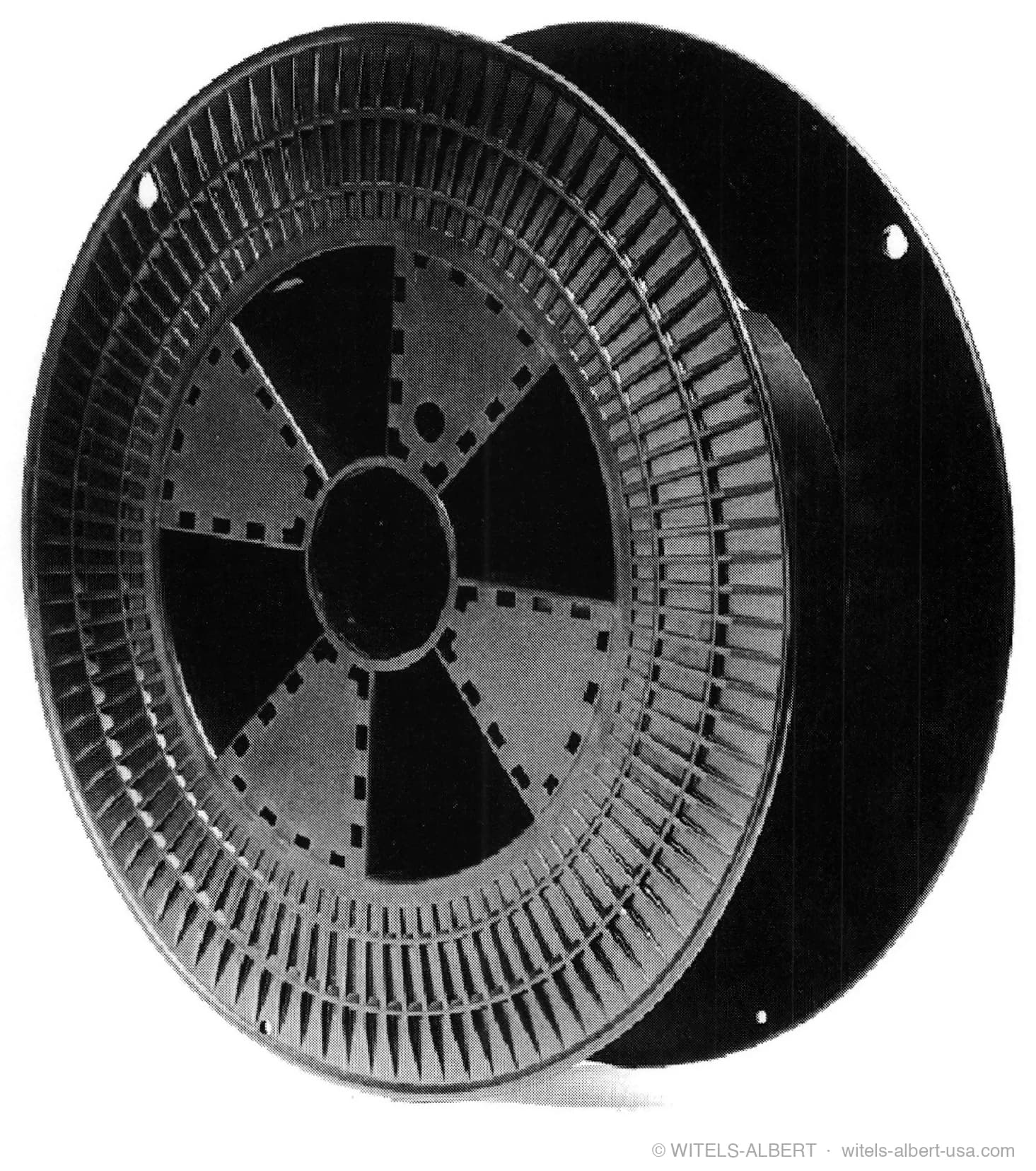
A spool is a carrier for safely transporting endless material such as wire, wound onto it layer by layer so individual windings do not slip. Because a spool has a minimal (inner) and a maximal (outer) diameter, wire paid off from it changes in speed and in curvature as the spool empties, which affects straightening downstream.
Spools are used for the safe transportation of endless material. The material is wound onto the spool layer by layer so that it is difficult for individual windings to slip. Spools have a minimal (inner) and a maximal (outer) diameter. This has two important consequences: a difference in speed and a difference in curvatures.
Frequently asked questions
What is a spool of wire?
A carrier on which endless material is wound layer by layer for safe transport, making it difficult for individual windings to slip.
Why does spool diameter matter for straightening?
The inner and outer winding diameters differ, which causes a difference in speed and a difference in curvature in the material as it is paid off.
How should wire be unspooled for straightening?
Dynamic pay-off, with the spool rotating around its axis, lets material come off without torsion; static pay-off along the axis creates a helix or twist in each winding.
Adapted from "We do it straight" — Wire Straightening, p. 147 (ISBN 3-00-005897-4).
Last reviewed .