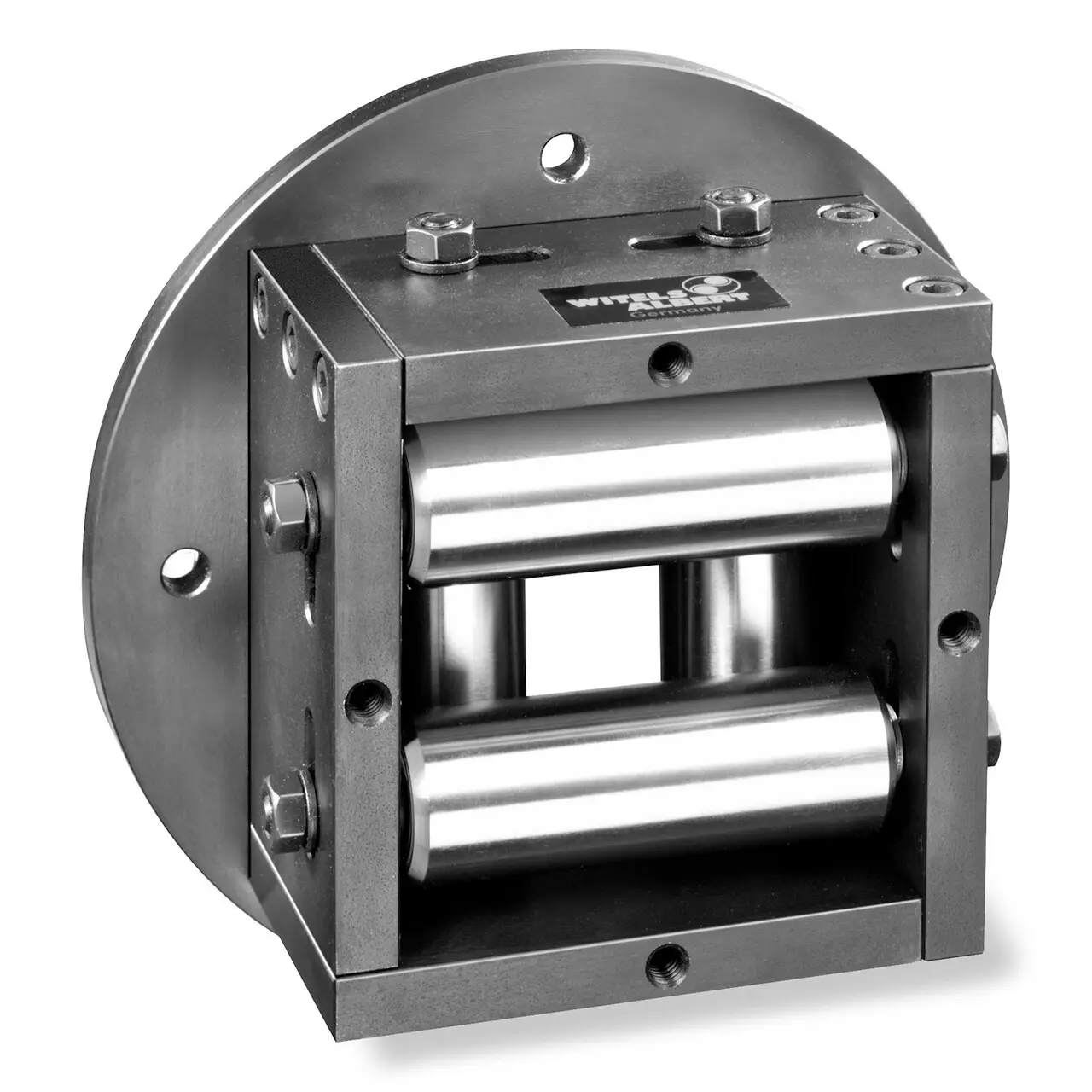
Wire guide rollers
Keep material centered before and after processing.

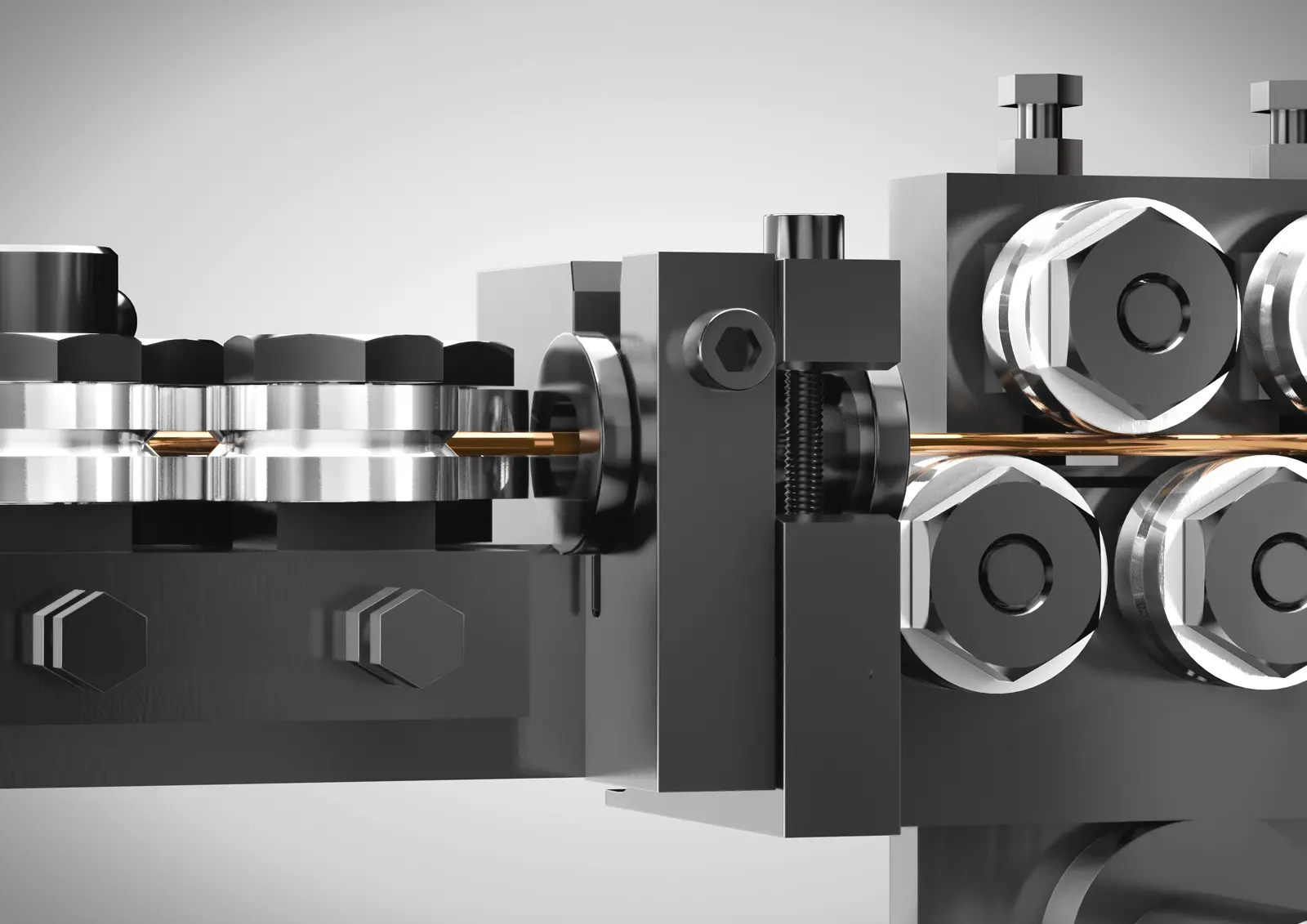
From fine wire to larger-diameter rod, depending on series, our straighteners, guides, and drive units present flat, centered, steadily fed stock to your downstream processes.
Material supply
Keep material centered before and after processing.
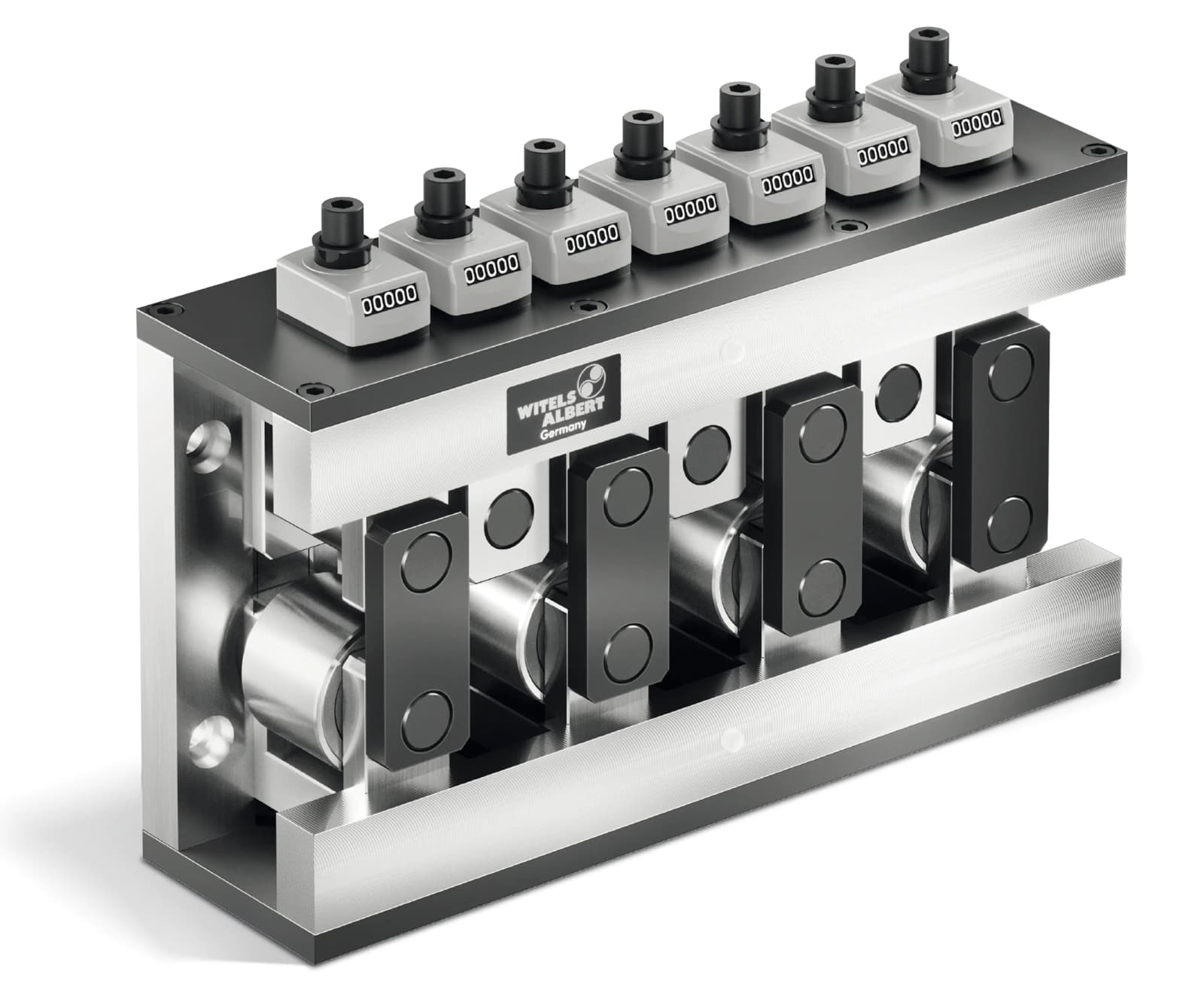
Reduce curvature before downstream operations.
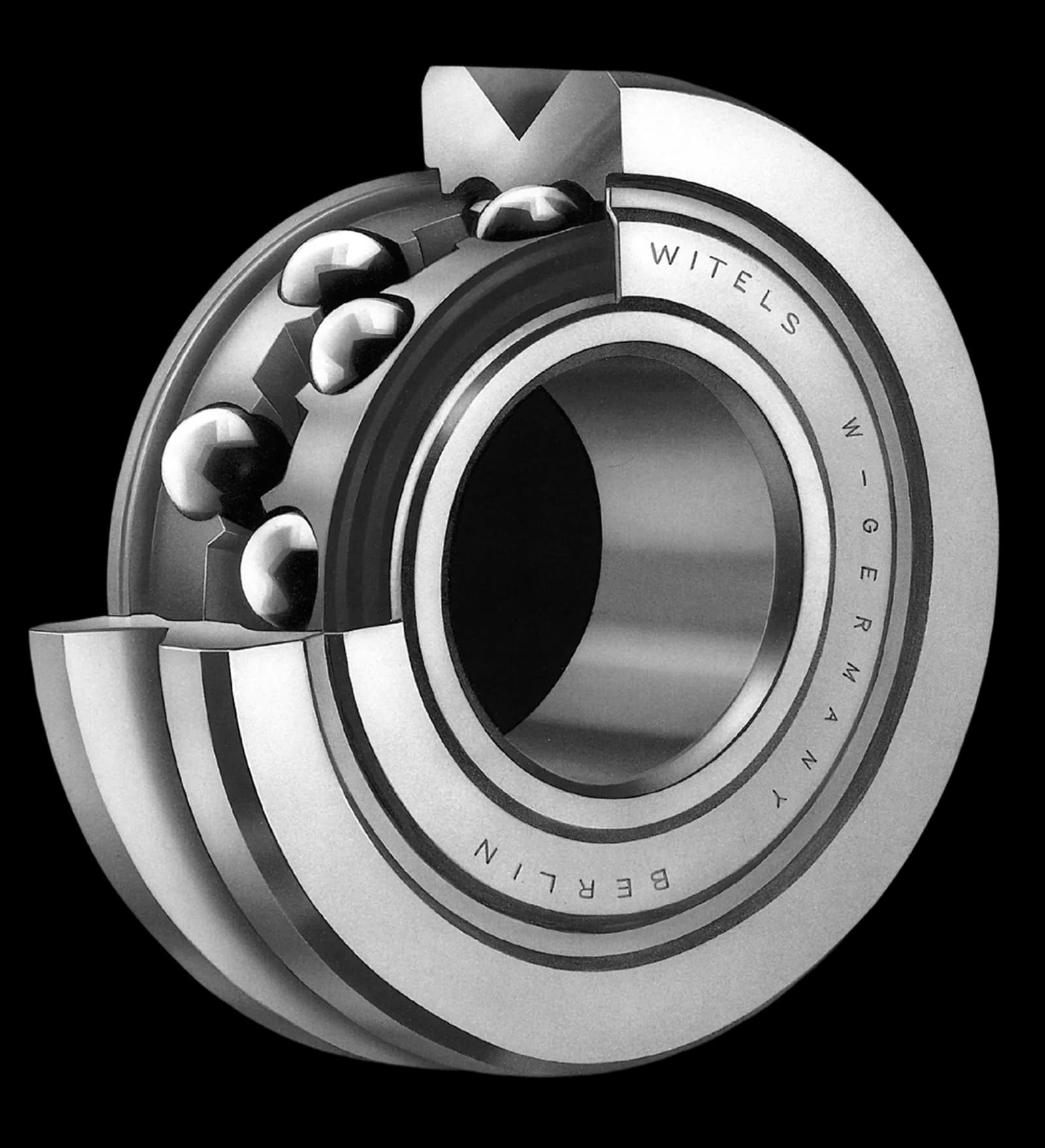
Sized and profiled to match your wire diameter and material.
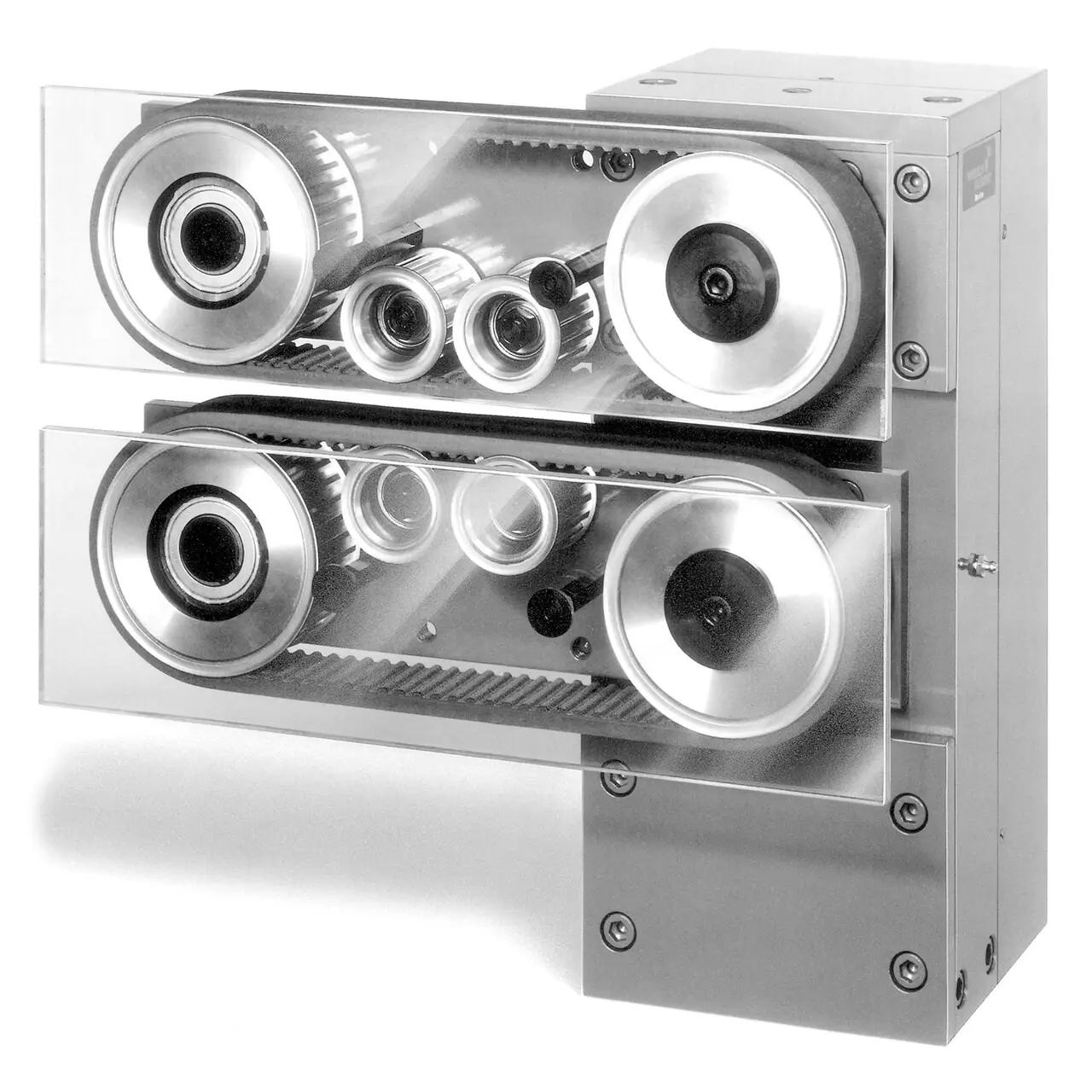
Feed material under controlled transport force.
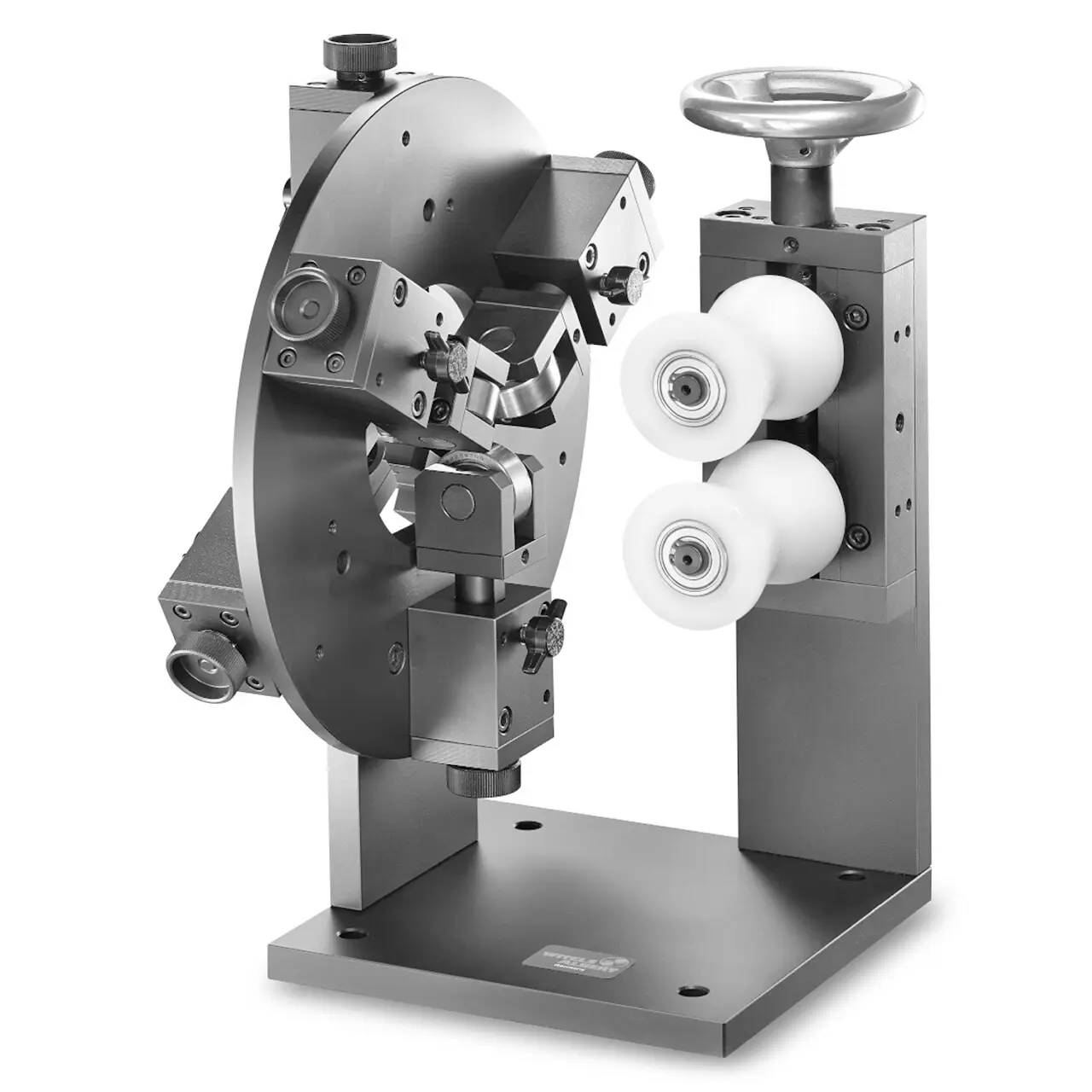
Stripping and measuring systems for cable, wire, tube, strip, and profile.
Cutting, forming, or coating
Adjustable and quick-closing roll options on selected series. Limits differ by series and model: each straightener series page lists its own size ranges, roll counts, and materials.
What bent or twisted wire does to a line, and what straightening addresses.
Curved or cast wire reaching cutting, forming, or coating stations is a common cause of out-of-tolerance parts. Reducing residual curvature upstream removes one source of rejects.
Curved or helical wire catches in guides, feed rolls, and die entries. Straighter, centered stock enters them more evenly and feeds more steadily.
Wire that arrives bent or twisted loads dies, guides, and cutters unevenly. Straighter stock spreads that load more evenly.
Results depend on material, incoming curvature, and line setup. Send us your material and tolerance requirements for a configuration recommendation.
The right configuration depends on wire diameter, material, and the straightness you need. More rolls generally allow a lower final curvature, and higher-yield-strength or larger-diameter wire typically needs more rolls or a larger roll pitch. Residual curvature can be reduced but not eliminated. Share your material, diameter, and tolerance, and we will work with Witels-Albert’s engineers in Germany to recommend a configuration.
Use double-plane straightening when incoming wire is curved in more than one plane, for example cast or helical wire. A second set of rolls, rotated 90 degrees to the first, corrects the second plane. A single-plane unit corrects curvature in one plane only.
Concentric guides use synchronized rollers that center the wire automatically, which suits fast setup. Precision guides allow individual roller adjustment for fine alignment.
Groove profiles are matched to wire material, diameter range, and surface requirements. Contact our engineering team to discuss non-standard profiles.
Get recommendations for your specific application from our team in Branford, CT.