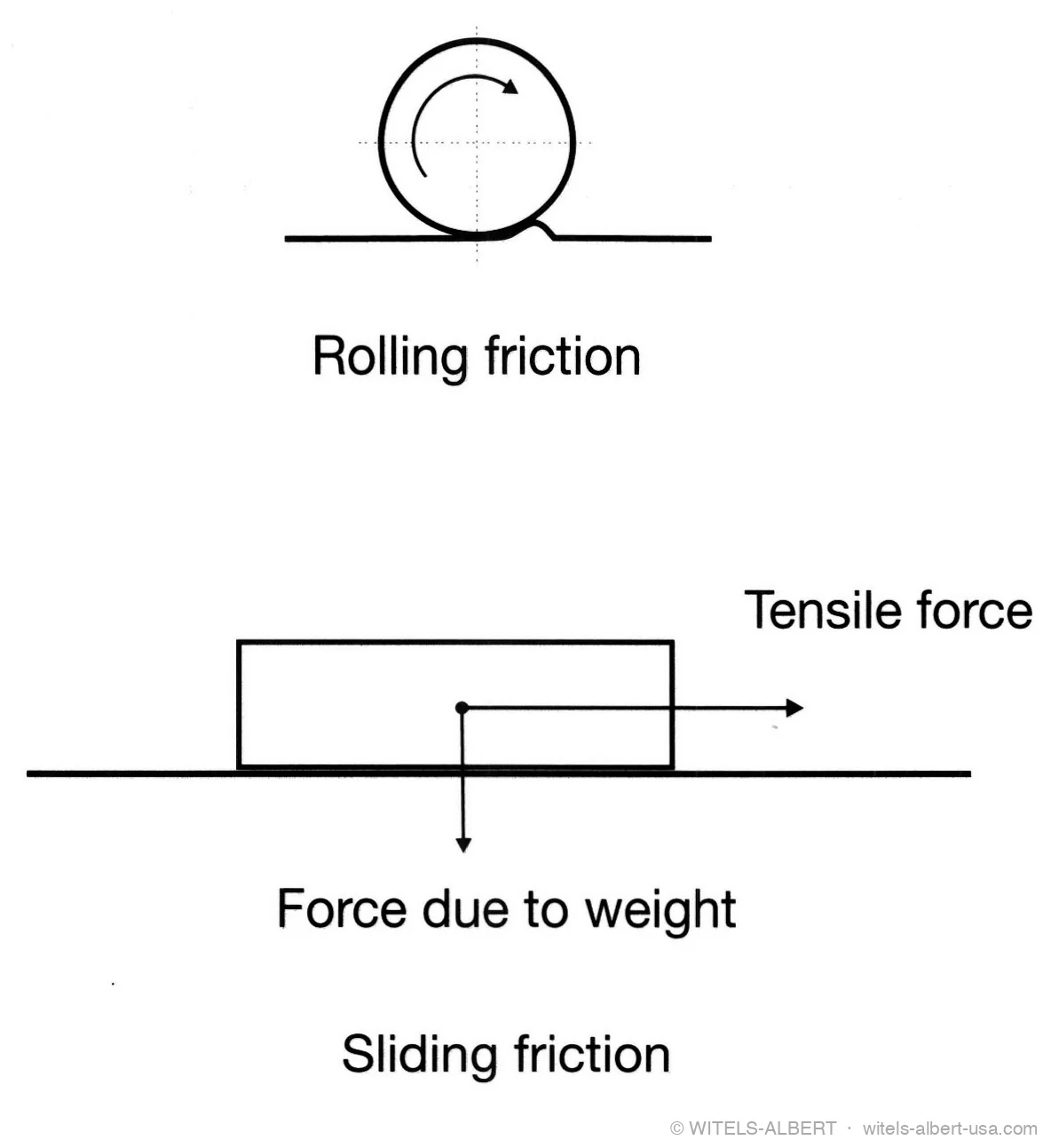
External friction is the inhibition of relative movement between touching bodies. In the case of solid bodies, friction is mainly based on microscopic unevenness. The frictional values of different materials relative to each other require special attention in this connection. Internal friction is the friction between parts of the same body. In liquids this friction is called viscosity.
During the straightening process, friction occurs mainly in the straightening rolls. It consists of the following components, which together add up to the total running resistance: rolling and sliding friction of the rolling elements and cages relative to each other, lubricant friction and seal friction. The aim must be to keep the friction as low as possible by ensuring an acceptable bearing load and optimal lubrication.
Friction leads to "losses", i.e. kinetic energy is converted into frictional energy. This energy fraction is therefore no longer available for use in the production process.
Adapted from "We do it straight" — Wire Straightening, p. 89 (ISBN 3-00-005897-4).