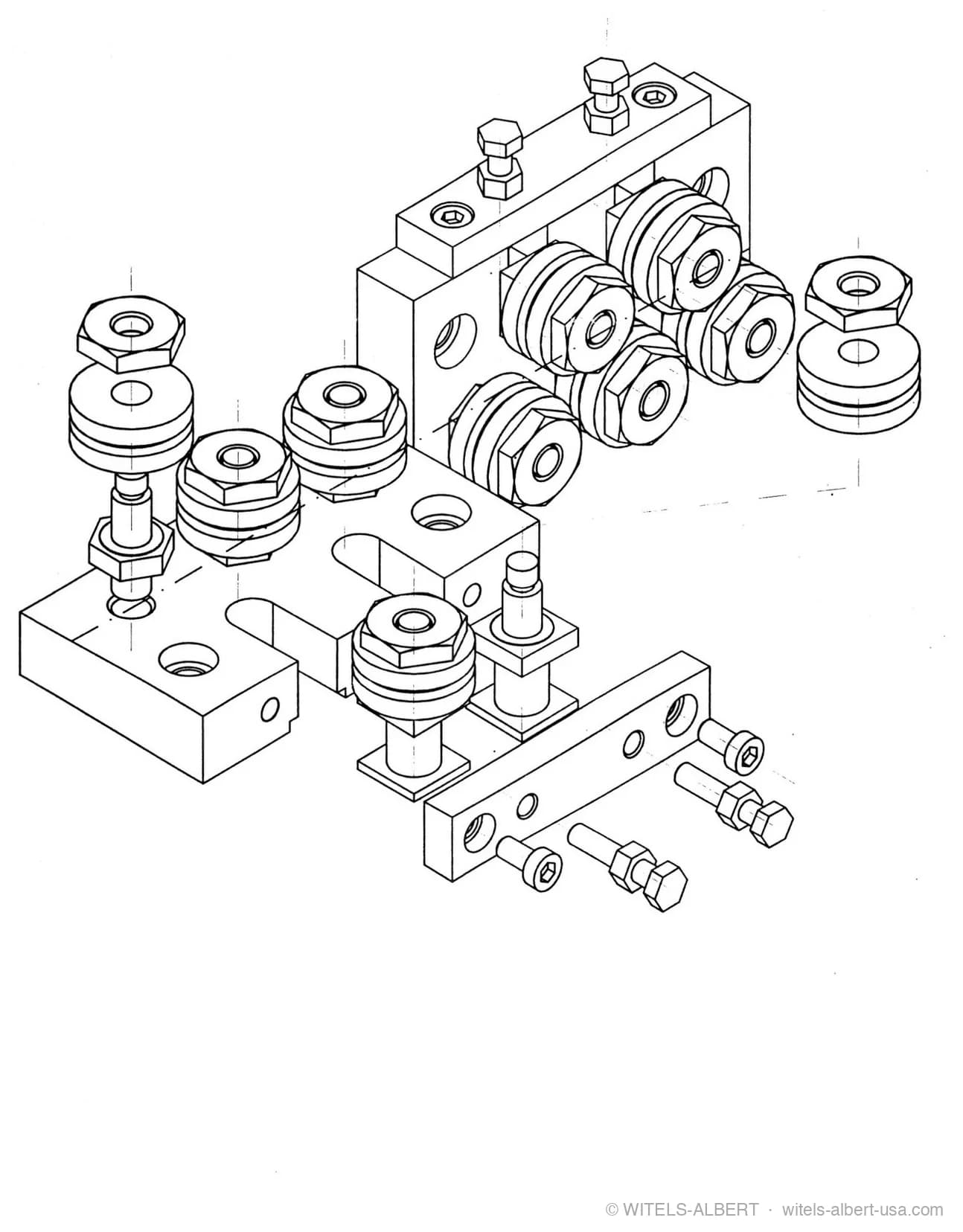
Maintenance involves measures designed to delay wear and keep equipment in good operating condition.
On roll-type straighteners, the component subject to the greatest wear is the straightening roll. The fastest wearing parts are the straightening roll groove and the running faces of the rolling elements. Apart from these cases of clearly visible wear, a straightener's adjusting devices, locking mechanism and guides are also liable to suffer wear with possible repercussions for quality.
The lubricants used on a straightener can also become "worn". In this case the signs are dirt accumulation or gumming.
Maintenance involves replacing tools, elements, modules and components before their wear can have a negative effect on product quality.
Adapted from "We do it straight" — Wire Straightening, p. 111 (ISBN 3-00-005897-4).