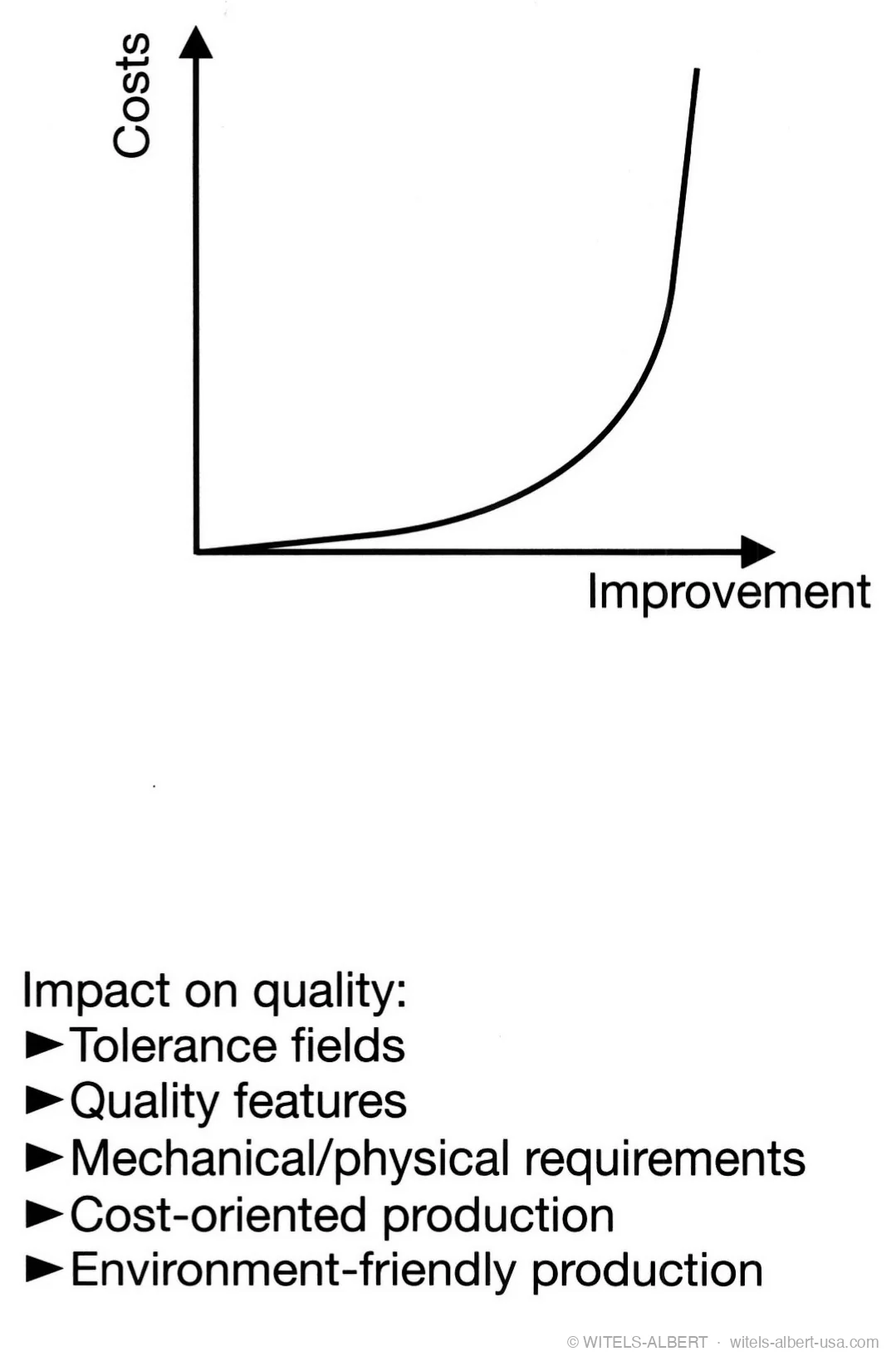
A correct straightening process set-up depends on an analysis of the final product as well as on an analysis of the material to be straightened and an analysis of the straightened material production process.
A final product's characteristics are defined above all by its specified tolerance fields, i.e. final curvature, final helicity, stretching limit and tensile strength. These are supplemented by quality features which result from the mechanical and physical requirements imposed on the final product. It is essential, therefore, for the straightened product to fulfil these preconditions and to display these quality features.
The objective of a final product's quality features must be to meet realistic requirements. Its tolerances should not be set any closer than is justified, nor should they be subordinated to process-oriented targets. Quality-oriented and environment-friendly production is likewise an important basis of any sensible improvements; energy consumption has an important role to play in this connection.
Quality enhancement takes on special significance in economic terms, too.
Adapted from "We do it straight" — Wire Straightening, p. 19 (ISBN 3-00-005897-4).