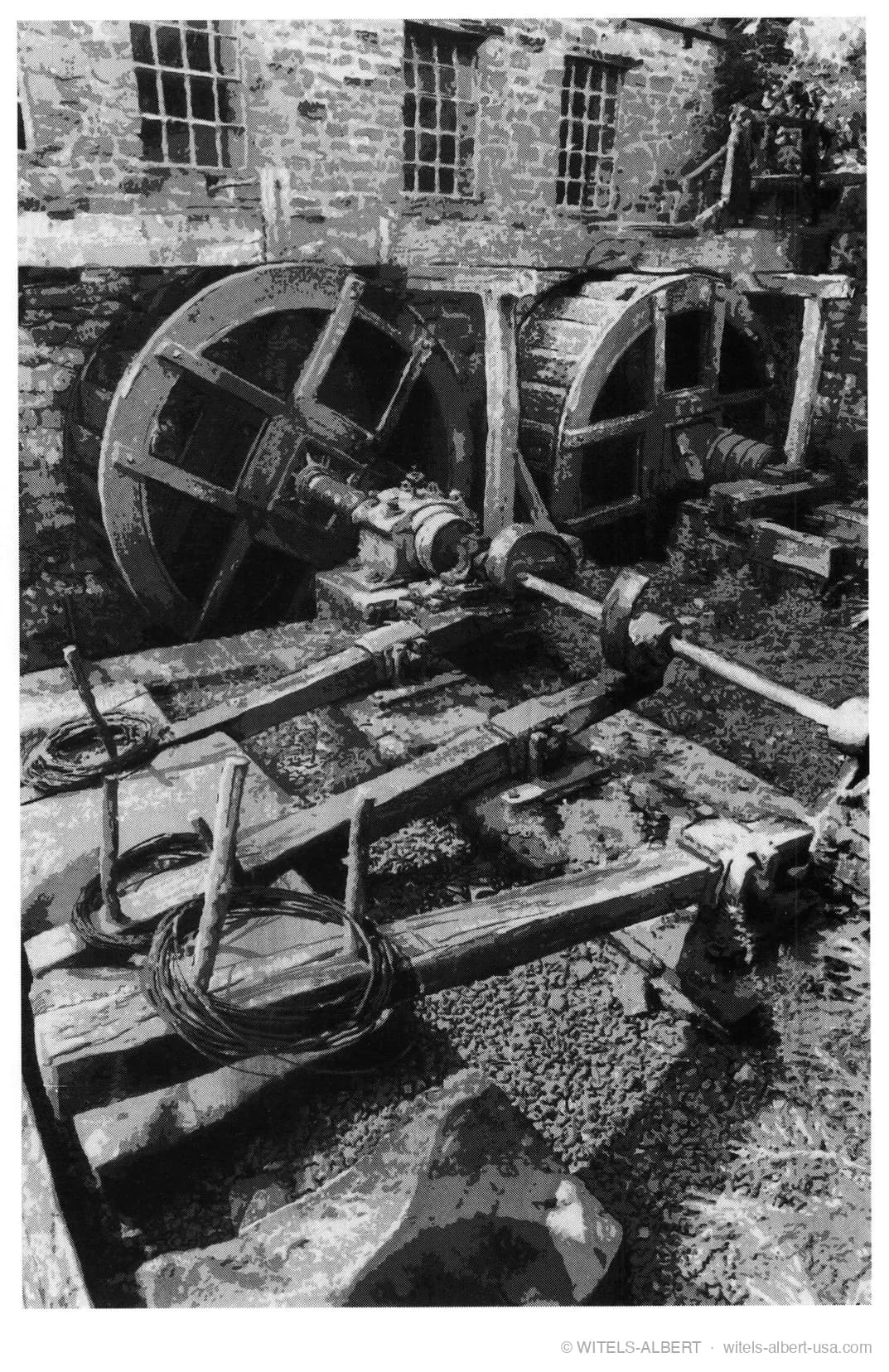
To make wire as clean as possible for the follow-up process it used to be washed in flowing water. The coils were placed on pegs fitted to a shaft similar to a waterwheel shaft so that the end of the rocker with the coils was raised. With the pressure removed, the rocker and the wire would descend into the river where the flowing water could wash away any loose particles.
The wire was then pickled, washed and limed to prevent frictional losses and high wear on the drawing die in the next drawing pass.
Adapted from "We do it straight" — Wire Straightening, p. 203 (ISBN 3-00-005897-4).