
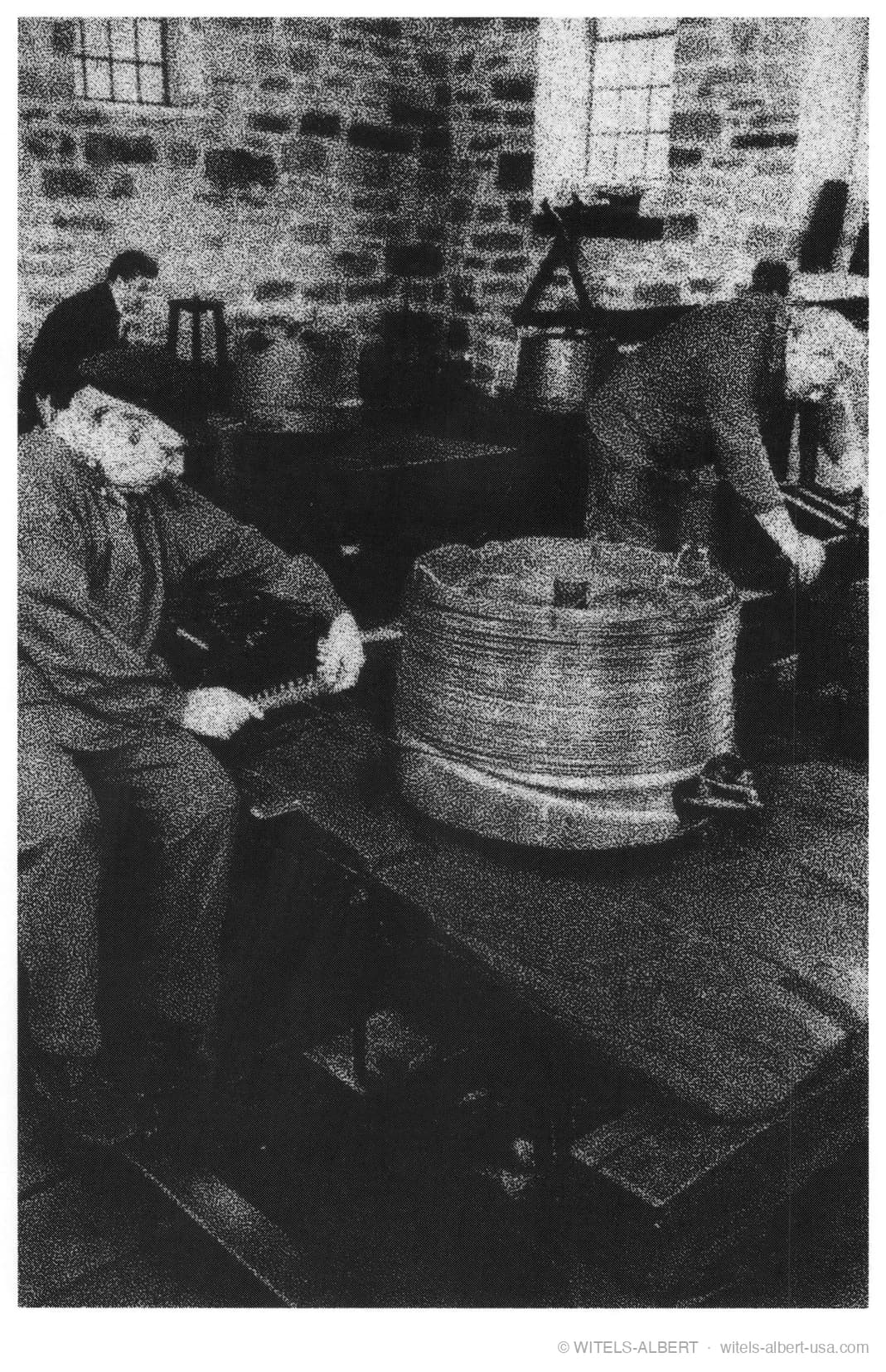
A wire drawer (German 'Drahtzieher') was the craftsman who drew metal wire through dies, rather than twisting it, in medieval Germany. Because marionettes were moved by drawing on their wires, by the 18th century the word also meant anyone 'drawing the wires' in the background, like the English 'pulling strings'.
Originally the German word "Draht" signified a twisted thread. In Middle High German the term came to be used as well for metal wires which were drawn - rather than twisted - by "Drahtzieher" (wire drawers).
Marionettes were moved by drawing on the wires on which they were suspended. In the 18th century the word "Drahtzieher" was used to denote any person "drawing the wires" in the background, similar to the English "pulling strings".
Frequently asked questions
What is a wire drawer?
Historically, a craftsman who drew metal wires; in Middle High German 'Draht' came to mean metal wire that was drawn rather than twisted.
What does 'Drahtzieher' mean?
Literally 'wire drawer'. In the 18th century it was also used for any person 'drawing the wires' in the background, similar to the English 'pulling strings'.
Adapted from "We do it straight" — Wire Straightening, p. 201 (ISBN 3-00-005897-4).
Last reviewed .