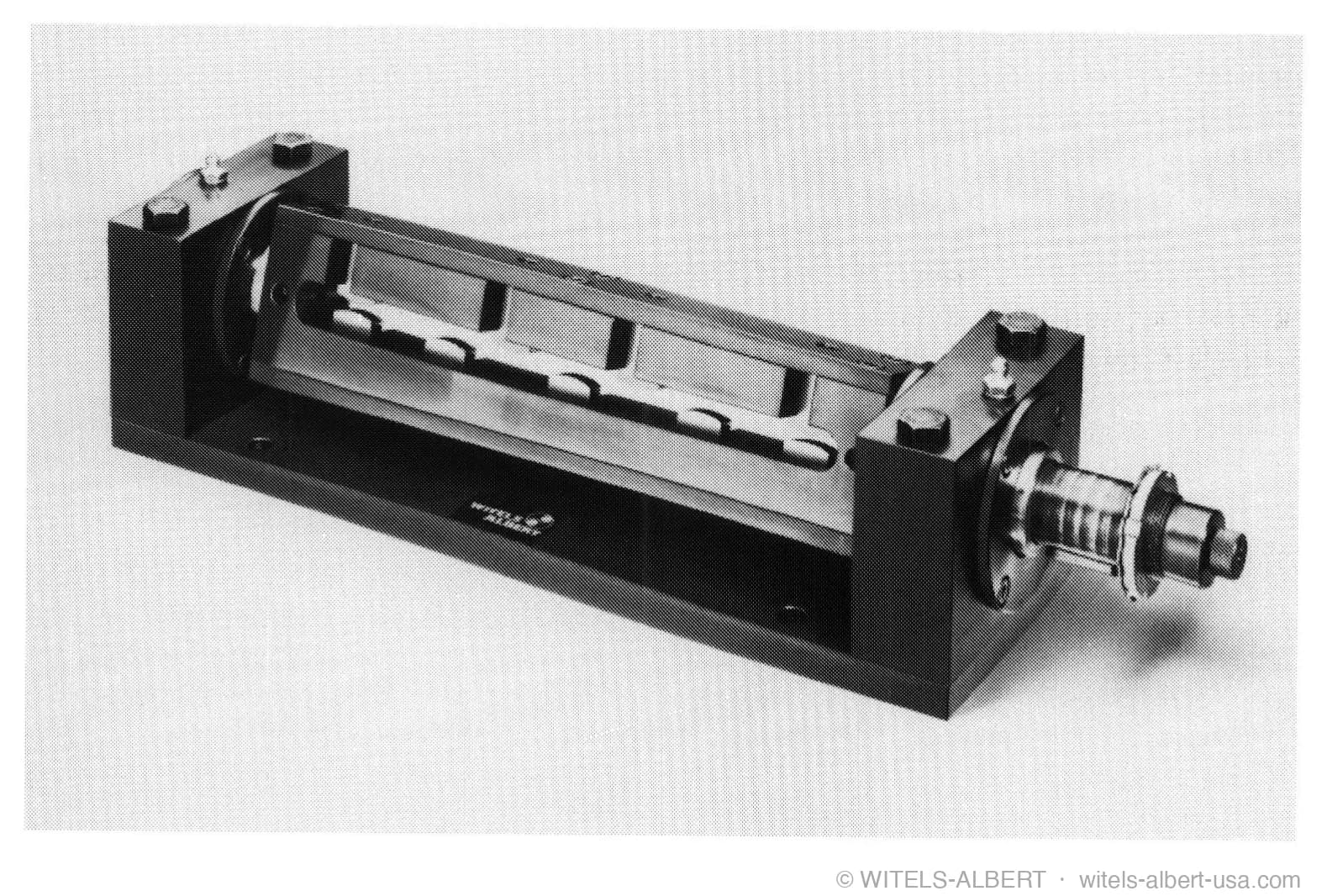
Unlike the roll straightening process, rotary straightening subjects the process material to alternating bends with a revolving bending axis.
The number of alternate bends depends on the speed of the product to be straightened and the number of rotations made by the spinner. Straightening blocks, straightening cheeks or straightening rolls are among the straightening tools used.
Rotary straightening is mainly performed in the production of rods or bars which permit a certain spring back of the material from the bending and torsion as the result of being cut to length.
It is sometimes wrongly assumed that two counter rotating straightening spinners neutralize the unwelcome stresses induced by torsion.
In view of the surface damage and sometimes severe impact on material parameters caused by the more aggressive forming of the product in the rotary straightening process, preference is being given more and more often to roll-type straighteners as the gentler alternative.
Adapted from "We do it straight" — Wire Straightening, p. 139 (ISBN 3-00-005897-4).