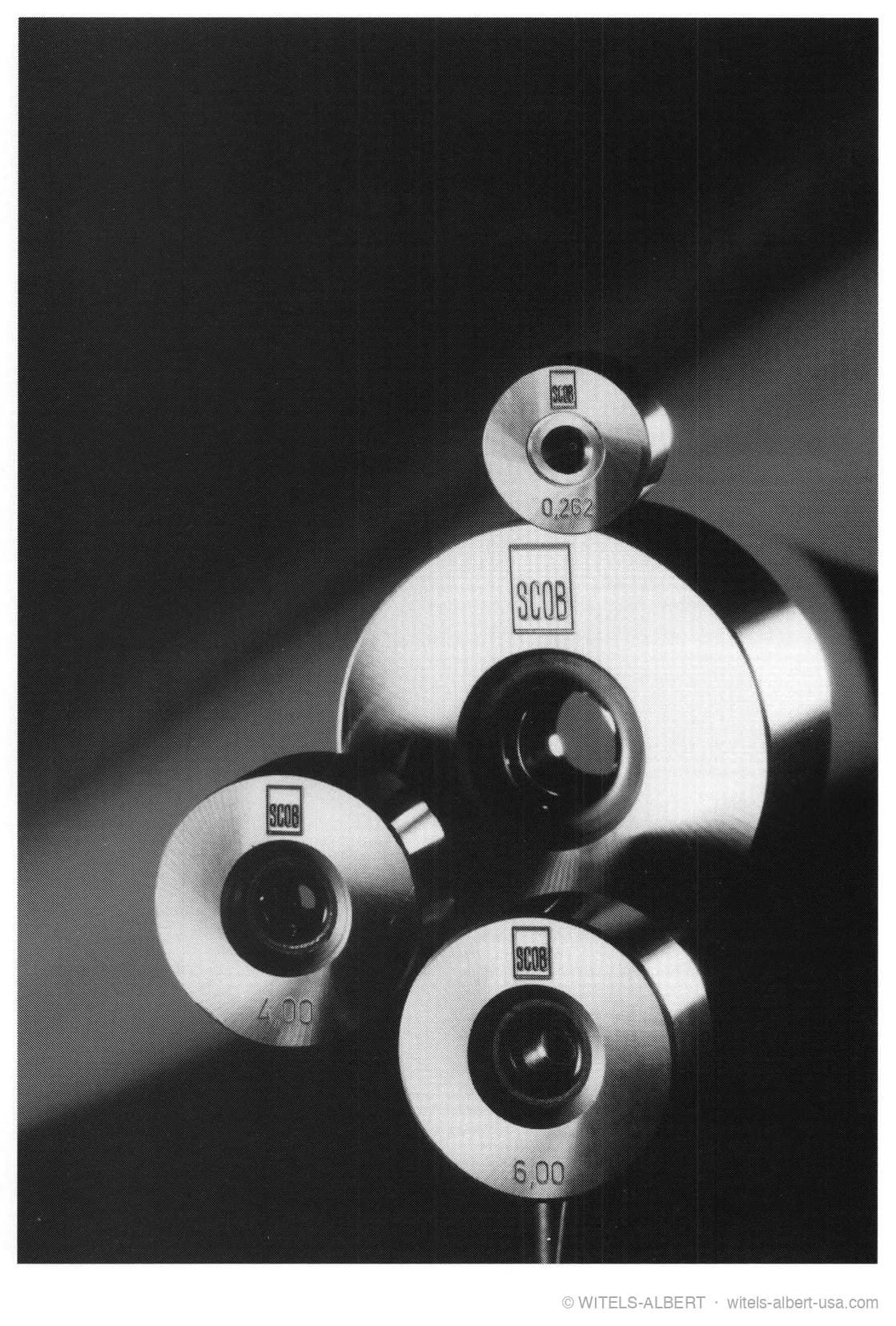
The forming of a process material by drawing is based on the wedge principle. The transverse force required for the forming is created by application of the external pulling force and, as the result of the drawing hole wall gradient and the friction between the surface of the process material and the drawing hole, acts on the interface between the process material and the drawing hole at a specific angle to the normal direction. The normal force is between four and seven times higher than the drawing force on account of the wedge transmission resulting from the angle of drawing and friction. Forming during drawing is thus performed mainly by the radial and tangential compressive stresses caused by the normal force in the material and less as the result of the axial tensile stress produced by the pulling force.
Adapted from "We do it straight" — Wire Straightening, p. 75 (ISBN 3-00-005897-4).