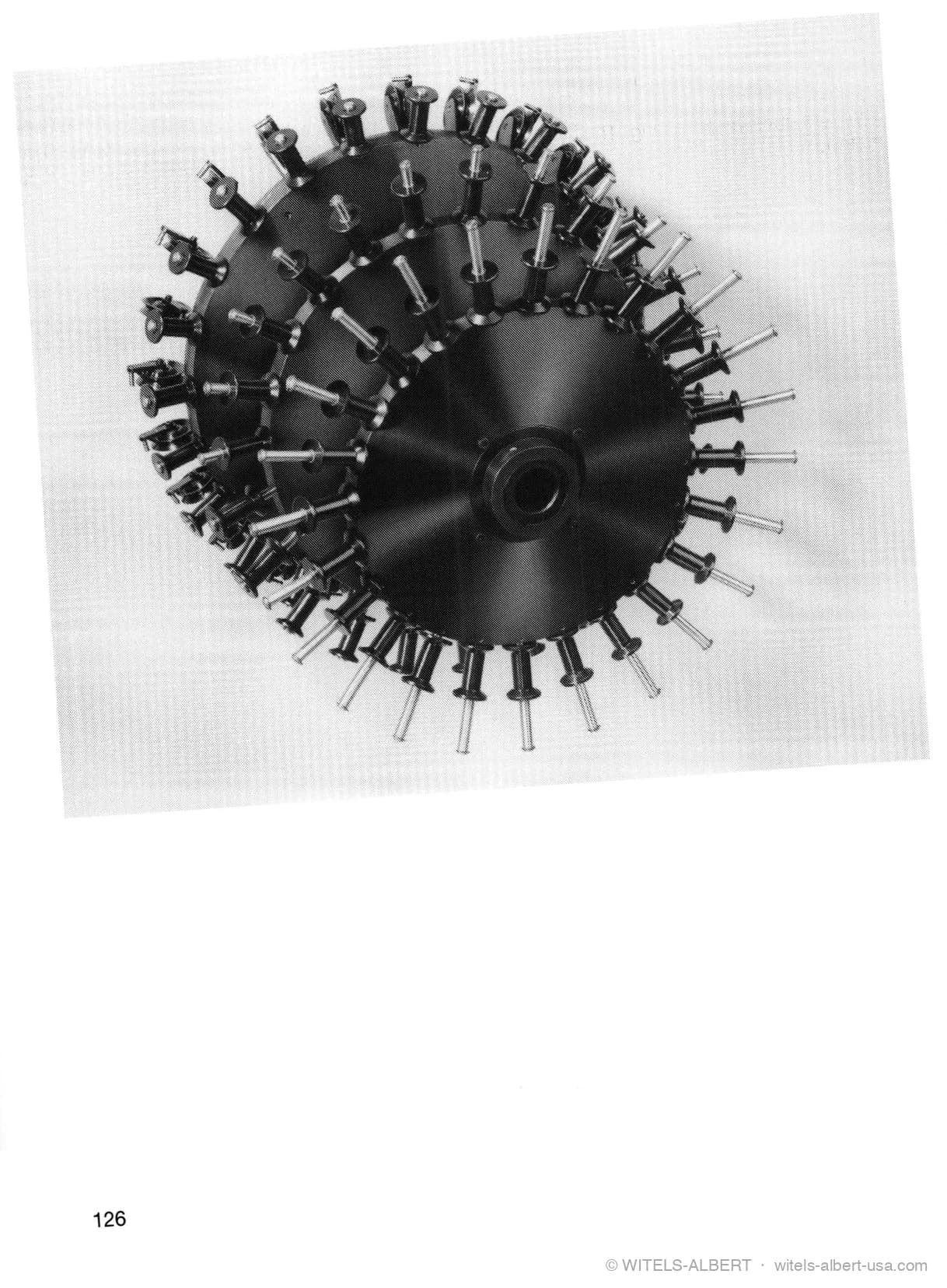
A wire rope is constructed from wires which are brought together as strands or legs and are formed into the structure of the rope. Wire ropes can be classified into single-lay and multi-lay ropes according to how the outer wires are formed. The forming of the wires, strands or legs begins ahead of the actual stranding point with the preforming head and is co-defined by the stranding process parameters, namely the length of lay, the angle of lay and the direction of lay. The preforming head, which rotates around the longitudinal axis of the revolving rope, uses systems of bending rolls applied radially in one plane to produce the characteristic spiral shape of the wire, strand or leg so that these elements result in as little stress as possible in the rope structure after the stranding. The "Trulay" process is sometimes used to denote this preforming method.
Adapted from "We do it straight" — Wire Straightening, p. 127 (ISBN 3-00-005897-4).