![]() |
|
|
FAQ’s
How do I decide what product(s) I need? You
must consider a variety of issues to determine the best solution for your
application. What experience do you have with wire straightening (or cable,
strip, flatwire, and tube straightening) and what do your operators have
success with? You should consider the properties of your material and the
needed straightness, as well as your application details. Witels Albert can
assist with information and personal discussions to help you make the best
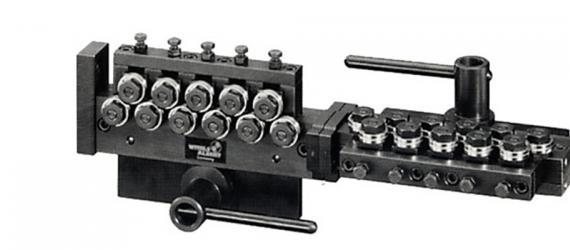
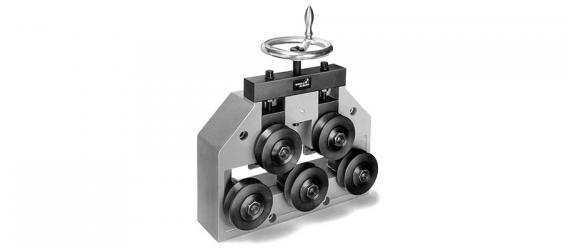
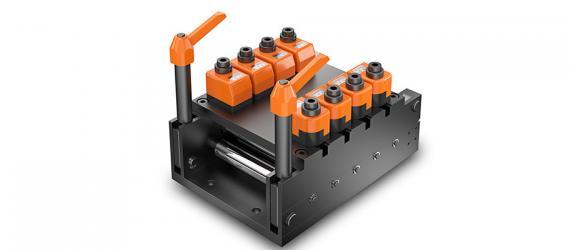
choice. Do you make 2 or even 3 plane wire straighteners? Witels Albert manufactures straighteners that can be used as single plane straighteners, double plane straighteners, and straighteners with more planes. Multi-plane straighteners are available for wire straightening, tube straightening, cable straightening and strip or flatwire straightening. We also work with customers on a case by case basis to supply brackets, or base plates, that would connect and align straighteners for proper alignment with the incoming curvature. back to top What is the purpose of a wire guide? A wire guide or roller guide is used in a variety of applications to ensure that materials enter down stream components in a desired alignment. Maintaining a quality “material zero line” for wire, tube, and other materials is important to the straightening process. back to top What is a feeding system?
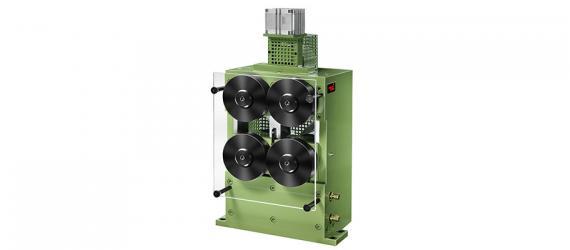
Feeding
systems, also referred to as drive units or drive systems, are devices that are
used to transport materials such as wire, cable, strip, flatwire and tubing.
Witels Albert manufactures both pinch roll and caterpillar types of wire feeding
systems, tube feeding systems, cable feeding systems, and strip or flatwire
feeding systems. With the help of our engineering staff, the system type and
size is determined by customer application requirements. We also supply motors,
controls and various levels of integration to suit customer needs.
A
wire straightening system is a reference to a quantity of components used in a
straightening process. It could be a single plane straightener, a double plane straightener,
and or another multi-plane straightener. It could also include a wire guide, a wire
feeder, and other processing components that may be needed to achieve a desired
material straightness. Tube straightening systems, cable straightening systems,
and strip or flatwire straightening systems are also available.
There
are many issues to consider with straightening quality. Is your straightener
properly sized for the wire or tube you are working? Is it aligned correctly? Do
you need a straightener with more rolls? How about the adjustment and
positioning? What are your upstream
processes and what effect do they have on straightness? Witels Albert can
provide many resources to help improve your straightening quality. Please feel
free to contact us for further information and/or to request a copy of our book
“We Do It Straight”. This book is as complete a resource on straightening available
anywhere. We also have a new simulation
program SimDATA 1.0 that calculates the precise
roller positioning to obtain straight wire.
Yes, absolutely. Whenever you can avoid adding more stress to the wire you buy, please do. Any additional wire bending, even if it is two inches up or down, adds stress. In the real world, we know that adding stress is sometimes unavoidable. In this case, straightening the wire immediately after stress has been added (i.e. after each bend) to remove the stress will give you straighter wire, tube, cable, flatwire or strip at the end of the total straightening process. In other words, respecting the “zero line” allows you to produce better quality wire. back to top It’s all about alignment – of your processing line equipment, including the wire straightener (or tube straightener, cable straightener, flatwire straightener or strip straightener). Making sure that the wire, tube or other material; and all components that touch that material; from beginning to end; are straight, level and parallel. That’s a relaxed description. The formal description follows: back to top Zero line of the processing system means that the material to be straightened runs through the processing system without undergoing any additional bending, deflecting, or guiding. Therefore, It is an advantage for wide spools to be axially adjustable in order to always obtain the required zero line. The zero line of the processing system includes the zero line of the straightener. Zero
line of the straightener describes the situation when all the straightening
rolls touch the material to be straightened but do not bend it. This setting is
usually made with a caliber, hence the term “calibration”. The zero line of the
straightener depends on the geometry of the material to be straightened and of
the straightening roll groove. The
wire or tube you work with has a large impact on how the material is
straightened and the straightening results. Higher tensile materials are more
difficult to work. For higher tensile materials, we suggest straighteners with
more than the standard roll quantity be used for optimal results. Avoiding dirt, particularly from metal particles, and
proper roll fit have a significant influence on the life of straightening
rolls. Under highly clean conditions your Witels Albertstraightening rolls can achieve much longer
life, up to 30 times the norm. Improved Witels straightening systems such as
the WICAS cartridge system are
designed specifically to prevent contamination from dirt and metal particles.
Witels
has the most comprehensive resources available for assisting customers with the
straightening process including the “We Do It Straight” book, various technical
papers about straightening, and our proprietary SimDATA
simulation program. In addition, technical sales engineers are always available
through Witels Albert USA. And, if further assistance is needed, the Witels
Albert engineering department in The
Witels Albert proprietary simulation program, SimDATA,
is another example of the many resources available to assist customers with
straightening processes. The SimDATA program allows
operators to input the parameters of the material being worked and the
particular wire straightener model and size being used into a computer. The
program then calculates straightener roller positions that yield straight wire,
with very little additional roller adjustment needed. SimDATA
also allows you to save these settings for future use.
Many
items are stocked or assembled to order. We also perform customer desired
modifications to better suit unique application requirements. Many
items are shipped from stock, and with expedited delivery, can be received in
one or two days. Other items are normally shipped in one to three weeks
depending on the item and if there is any customization required. All
our products are sold FOB Baltimore or |
|
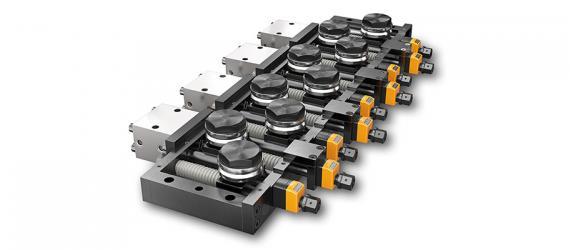
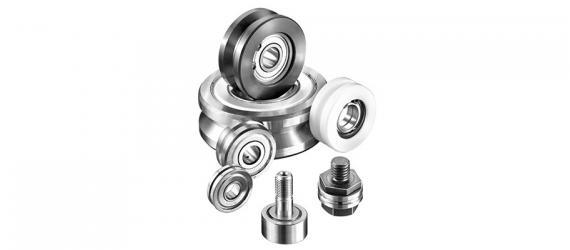
Witels Albert supplies a variety of straightener accessories for ease of set-up and “repeatability” of settings. For example: quick opening/closing options, roller position indicators, locking levers, entry/exit guide pulleys, guide dies, micrometer adjustment, guards, and Witels Albert proprietary software packages that allow for automatic or semi-automatic positioning of rollers and other components. In addition, our wide range of range of raw material handling products includes wire straighteners, tube straighteners, wire guides, tube guides, tube feeders and wire feeders or drive units, cable straighteners, strip straighteners, flatwire straighteners, custom built feeding machines, straightening rolls , preformers or preform heads , sleeve rolls for high speed and high temperature applications, computerized wire straightener and tube straightener adjustment systems, and Witels Albert proprietary software packages that allow for automatic or semi-automatic positioning of rollers and other components. |
|
WITELS ALBERT USA - 208 E. Pier St. - Oxford, MD 21654 - Phone 1-410-228-8383 - Fax 1-410-228-1813 - info@witels-albert-usa.com |